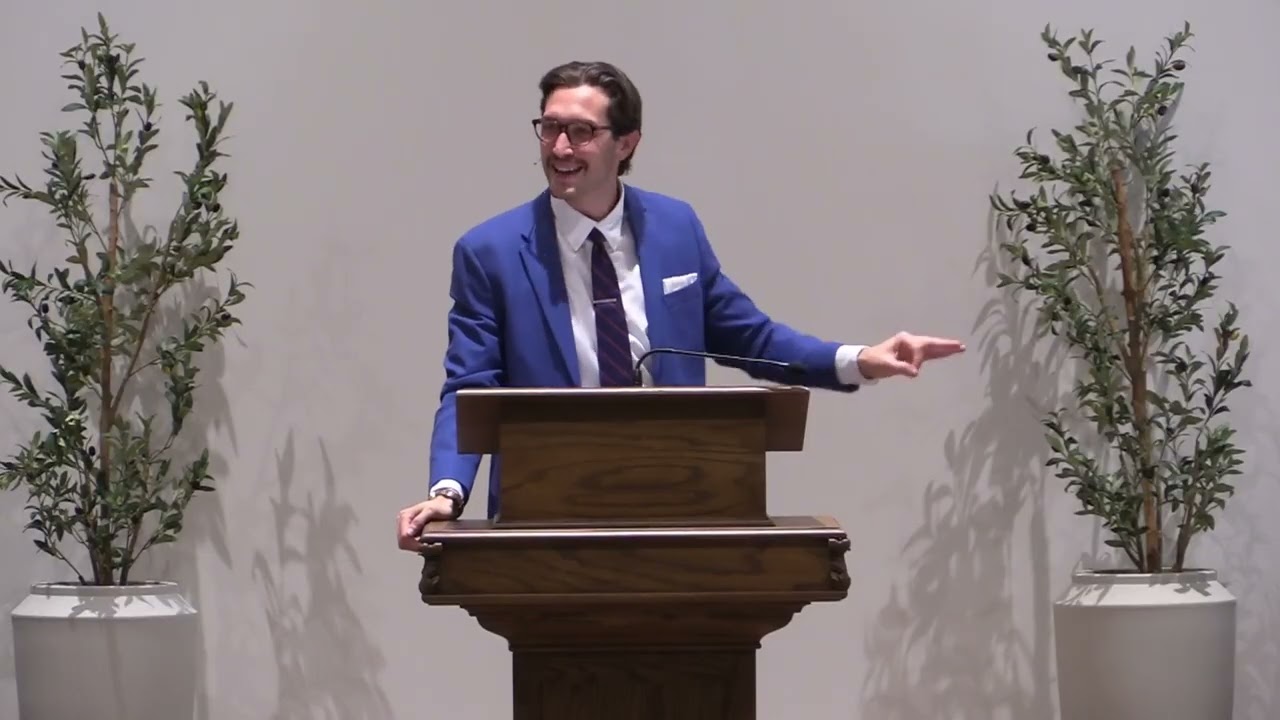
In this sermon on John 9:1–12, Zack DiPrima introduces the account of the man born blind as a living illustration of Jesus’ declaration, “I am the light of the world.” The message explores the relationship between suffering, sin, and the providence of God, showing that while all human suffering ultimately flows from the fall, not every instance of suffering is a direct consequence of personal sin. Instead, God often uses pain, weakness, and hardship as a stage upon which to display His glory and power. Through the healing of the blind man, the sermon highlights Christ’s compassion toward the suffering, His ability to grant both physical and spiritual sight, and His call for sinners to come to Him while the light of the gospel remains available. The message also offers practical encouragement for Christians enduring trials and exhorts the church to become a place of compassionate care for those who suffer.
Please turn in your Bibles to John chapter nine. We’re continuing in our series through the Gospel of John, and it is normally our practice at some point in the summer to move away from whatever series we have been in to spend a few weeks in the Psalms. That is again our plan this summer. My intention is to finish John nine and another sermon or two, and then we’ll be in the Psalms for five or six weeks, something like that.
I don’t plan too far ahead, but this morning we’re going to be in John nine. Technically, we’re going to be in verses one through 12, though I’m mostly going to be focusing on verses one through five. I’m going to encourage you to turn into your Bibles rather than turn it into those bulletins, because that bulletin doesn’t have verse numbers in it. And the verse numbers are helpful to see that we’re on the same page.
Let’s go to the Lord once more in prayer. Let’s pray.
Almighty God and most merciful Father, we humbly submit ourselves and fall down before Your Majesty, asking from the bottom of our hearts that this seed of your word now sown among us may take such deep root that neither the burning heat of persecution cause it to wither, nor the thorny cares of this life choke it out. But that as seed sown in good ground, it may bring forth thirty, sixty, or a hundredfold. Help us, Father, as your heavenly wisdom has appointed, through Jesus Christ our Lord. Amen. Amen.
John nine is an illustration. That doesn’t mean it’s not true. It doesn’t mean that what we see in this text didn’t happen exactly as it happened. But it is to say it is a true story that illustrates a deeper point and message about Jesus Christ. It is what we could call a living narrative that John uses to expound the preaching of Jesus that we have already seen, in particular the preaching of Jesus that we have seen in John eight.
So the healing of the man born blind that we just read, the extended narrative of everything that unfolds in chapter nine, is a breathing, vivid portrayal of John 8:12. If you have your Bibles, look at John 8:12, where Jesus declares, “I am the light of the world. Whoever follows me will not walk in darkness, but will have the light of life.”
John nine is expounding in real life, vivid color, panoramic display that verse: light of life in Jesus Christ. Jesus gives physical and spiritual sight to the man born blind. He gives eyes to the body and eyes to the soul. Everything in this text is about soul-seeing. That’s what John nine is about—seeing the Lord Jesus Christ with the eyes of the soul.
Soul-seeing is faith. It’s a type of faith that leads to eternal life. So seeing is saving faith in Jesus Christ. It’s a faith that follows him. It’s a faith that abides in His Word and keeps his word. It’s a faith that obeys him. It’s a faith that, like Abraham, rejoices at the day of the Lord. This faith has feelings and affections and joy in Jesus Christ.
John nine is all about soul-seeing, produced by the sight-giving light of Jesus Christ. And just as light illuminates, light also exposes and blinds. There’s a lot of things going on in John nine. Its aim is to give sight to the blind, but it also exposes spiritual blindness. You see, Jesus exposes the spiritual blindness of the self-righteous Pharisees.
That’s why we had the whole passage read a moment ago. So you can see what happens in this text. Look at verse 39. Jesus said, “For judgment I came into this world, that those who do not see may see, and those who see may become blind.” Some of the Pharisees near him heard these things and said to him, “Are we also blind?” Jesus said to them, “If you were blind, you would have no guilt. But now that you say, ‘We see,’ your guilt remains.”
Yeah, you don’t think you’re blind, but you actually bear the guilt of blindness because you think you have the light. You think you’re righteous. But it’s only those who know that they’re blind that apply to me for faith, that repent of their sins, believe on the Lord Jesus Christ, believe that I am he. Only those types of people are actually cured of their blindness.
So that’s where we’re going in John nine. But along the way, there’s just solid gold everywhere in this passage that I’m going to try not to ignore. We probably won’t hit everything over the next two or three weeks. We’re taught a variety of lessons for the Christian life that vary in how directly they are connected to that main idea that I just sketched out.
So just as an aside, this morning, we’re going to be focusing on verses one through five. We’re covering verses one through 12. I have no idea what’s going on with the spit and mud. So like if you have questions about that, I will be of no help to you and anybody, honestly, I think who thinks they know what’s going on there. I don’t think you can know with certainty. So forget the saliva. We’re focusing mostly on verses one through five.
I got three points. Point number one: the man. Point number two: the question. Point number three: the answer. The man. The question. The answer.
Point 1: The Man
Look at verse one. “As he passed by, he saw a man blind from birth.”
The two things I want to highlight about this man who is said to have been born blind. First, the sorrow of the man born blind was a product of sin. It was indeed not his own sin nor that of his parents, but brothers and sisters, make no mistake, it was a product of sin nonetheless. It sprang from the very sin of Adam. Everything in your life that’s wrong is because of the fall. Everything that doesn’t work out right. Every ailment, every infirmity. Your back that’s hurting in your chair right now is because of sin. Could be because of your sin. Could be because of your grandfather’s sin. Could be because of something else. But I know one thing: it’s because of the sin of Adam. From Adam’s curse, that single act flows all iniquity. And everything that’s wrong with the world is because of sin.
R.C. Ryle reflects on the sorrow of the man born blind. He says, “Now, blindness, like every other bodily infirmity, is one of the fruits of sin. If Adam had never fallen, we cannot doubt that people would never have been blind or deaf or mute. The many ills that flesh is heir to, the countless pains and diseases and physical defects in which we are all liable, come in when the curse came upon the earth. By one man sin entered into the world, and death by sin.”
Brethren, that should really make us hate sin. All of this pain, all of this suffering, all of the wrongdoing that you endure personally is all because of sin, even your own remaining corruption. And it should lead you to rage against that sin and hate that sin all the more. Every infirmity and inconvenience are the result of the fall. No physical abnormalities or instances of pain are arbitrary, but a direct consequence of sin.
But the other thing I want us to see, friends, is that the man born blind was dignified by Jesus. Jesus did not ignore the blind man despite his pitiful condition. Jesus noticed him. Jesus as a person according to his nature shows compassion to the sick and the suffering. Jesus’ friends did not walk this earth untouched by our infirmities. And Jesus is not a person who once lived. Jesus lives now and presently embodied, robed in majesty, but incarnate nonetheless. He has a body, lungs, and a heart that beats. Jesus is not untouched with the sting and the effects and the pain and the sympathy with sin.
Jesus is completely sinless. He’s without sin, but he is not untouched. He can sympathize with our weaknesses. Hebrews 4 says this better: “We do not have a high priest who is unable to sympathize with our weaknesses, but one who in every respect has been tempted as we are, yet without sin.” So untouched by the guilt of sin, Jesus brimmed with compassion for sinners themselves. And he does to this day and for all those who bear the effects of sin.
Psalm 146: “The Lord daily gives food to the hungry. He sets the mourning prisoner free. He raises those bowed down with anguish and causes the sightless eyes to see.” That’s just what Jesus does. Part of what I want you to understand about Jesus in this text is that this is who he is. Jesus is nearer to those who are suffering, and Jesus receives those who come to him, and all those who come to him have life.
In our text and a culture that only seemed to notice this man once he could see, Jesus saw him when he was blind.
Brethren, I just can’t ignore. It’s notable that this man was born blind. These days most people know about genetic disorders before children are born, and when they know of certain genetic disorders, they choose to kill the child. It’s rampant in every country in the world. In Iceland, 100% of born children identified with Down syndrome are killed. They celebrate this. We’ve eradicated Down syndrome in Denmark. It’s 98%, in France at 77%, and in the United States it’s 67%.
Friends, the spirit of the age hates children, especially abnormal ones. This is why the Proverbs say that those who hate wisdom love death. The culture loves death, and they hate children. Detect an inconvenient illness, murder the child. Surely such children have no dignity or worth. They don’t have a life worth living.
Jesus doesn’t say that. No. Jesus saw this man born blind. Though the image of God is said to have been marred in him, he saw him with dignity nonetheless. Jesus saw the needs of the man born blind. And then seeing the need, he met the need.
This isn’t the main idea of the sermon. But brethren, I want this to encourage especially you parents who have children with disabilities. We live in an age that celebrates disabilities and I can understand the reasoning for that. But I think every one of you parents, if you have a child with a disability, if you ever had a child with a disability, you would wish that child did not have that disability. Don’t let that make you think that that child is any less in the eyes of God, of any less dignity or worth.
Children are a heritage from the Lord no matter what, even when they are burdened by the bitter effects of sin. The image of God can be marred. All of us are still formed and fashioned in that image. Your child has immeasurable worth in the eyes of Jesus Christ. As we can see in this text, as he was walking by, he sees the man born blind.
Okay, that’s the man.
Point 2: The Question
Verse two. And his disciples asked him, “Rabbi, who sinned, this man or his parents, that he was born blind?”
So the disciples see the blind man, and believing that this must be the consequence of sin, they asked Jesus, “Whose sin was responsible for the blindness, the blindness in the man?” Now, friends, I think most of us need to realize that this is a better question than we tend to realize.
You see, because God, quite regularly throughout the Bible, judges the sin of believers and unbelievers alike by afflicting them with illness, death, and trials. God judges his people and unbelievers alike, often through earthly trials and tribulations and circumstances. According to his providence, the God of the Bible judges personally, generationally, corporately, and nationally, though not always and not in every instance.
But you just gotta believe this about the God of the Bible. Deny this, and the Bible ceases to make sense. Many evangelicals have sought to characterize any emphasis on physical, earthly consequences for sin as backwards and legalistic. I think that’s a tremendous error. This is just something we see throughout the Old and New Testament. God still judges sin with earthly consequences.
When Miriam challenged the unique prophetic authority of her brother Moses, God gave her leprosy on the spot. Exodus 20 verse 5, the second commandment: “Do not commit idolatry… for I, the Lord your God, am a jealous God, visiting the iniquity of the fathers on the children to the third and fourth generations of those who hate me.”
The Lord destroyed all the people of Sodom and Gomorrah for their perversion and sin. The prophets announced furious judgment upon nation after nation. God sent a fish to swallow Jonah. And listen. God does not magically soften in the New Testament. In the New Testament, Ananias and Sapphira lied to the Holy Spirit and were struck down dead. Herod accepted worship and was eaten by worms. And Paul told the church in Corinth the reason why many of you are weak and sick and some have died is that you have been eating and drinking the Lord’s table without discerning the body of the Lord.
Brethren, the scriptures are clear. God at times visits his people and unbelievers with physical and providential consequences for their sin.
Now, two cautions. First, the pattern in the Bible is that God tends to judge people this way in response to high-handed, overt, unrepentant sin. So when you stub your toe this afternoon after you’ve lost your temper with your child, don’t think that God must be judging you. He may be, but I don’t think you have to conclude that.
Second caution: we should not assume or conclude that the pain we see in our lives or others is always the consequence of personal sin. The disciples’ error was not that they had the category of earthly consequences for sin; it was that they thought personal or generational sin were the only explanations for this man’s suffering.
That’s what they’re basically doing—rinsing and repeating the same error of Job’s friends. Friends, a proper theology of pain and suffering does not deny earthly consequences for sin, nor does it insist upon them in every instance of suffering.
So that’s the question.
Point 3: The Answer
Verse three: Jesus answered, “It was not that this man sinned, or his parents, but that the works of God might be displayed in him. We must work the works of him who sent me while it is day. Night is coming when no one can work. As long as I am in the world, I am the light of the world.”
There’s three lessons the Lord teaches in his reply.
First, the man’s plight was a lesson in God’s severe providence. This man’s blindness was a lesson to all who could see. According to Jesus, this man’s life was a canvas for the finger of God. It was to display his wonders, to display his glory. And he has in mind he’s about to heal this man. And that’s why God has put him through this blindness for years and years—because of this moment. He’s going to display his glory in the healing.
And much more than that, every moment of this man’s life was leading to this single event, all indelibly captured by John for the eternal benefit of the church.
Put yourself into the narrative from the perspective of the blind man. This man would have had no possible insight into the precise purposes God had for his pain until the day he met Jesus. But on one Sabbath day God was pleased to display his mighty works in him.
Though God may not be pleased to deliver you from your suffering in this life, the truth remains he is always pleased to display his power in Christian pain. That’s God’s purpose all the time. In Christian suffering, he wants to display his works. He wants to display his glory and power and the supremacy of Jesus Christ.
All forms of suffering offer the Christian an opportunity to bring peculiar glory to God. In fact, the child of God is assured that all things work together for the good of those who love God and are called according to his purpose.
John nine shows us the unique opportunity suffering has to display the sufficient grace and perfect glory of Christ. God is pleased to display his peculiar glory, strength, and power in the pain of all of his people. I can think of no greater encouragement for suffering saints than this.
Jesus drew near to this blind man. He’s going to save him from his blindness. He’s going to save his soul. The people of God are to resemble Jesus in this way. They are to draw near and to encourage the suffering as well.
We need to be a church full of people ready to endure suffering and to encourage those who experience suffering. Whether or not you’re experiencing suffering now, you’re going to experience suffering one day. And you need to know how to get through suffering as a Christian and how to draw near to your brothers and sisters who are suffering.
Ten Exhortations
Five for those enduring suffering:
- Do not suffer alone, but make an effort to make your suffering and needs known to the body.
- Learn to calibrate your sorrow. There are degrees of loss. Wisdom demands proportional sorrow.
- Do not make the plight God has assigned to your life into a totalizing identity. Your suffering is not who you are.
- Receive encouragement and help from your brothers and sisters in Christ.
- Rejoice with those who rejoice. A healthy church celebrates God’s grace without making every joy a minefield.
Five for those encouraging the suffering:
- Learn to give more than theology. Presence, affection, sympathy, and practical help make the truths of the gospel come alive.
- Say anything but nothing. It is better to say something imperfect than to say nothing.
- Don’t ask someone suffering to “let me know if there’s anything I can do.” Just help them.
- Follow up. Churches are often great in the immediate wake of suffering but not for the long haul.
- Treat suffering people like normal people—or better yet, your brothers and sisters in Christ. Include them. Pray with them. Pull them further into life.
The Lord Jesus Christ had a heart for the man born blind in the midst of the most profound pain. Christ drew near to him. He gave him eyes that could see and a soul that could savor. He had particular plans to display his glory through this man’s suffering.
Secondly, the man’s plight was a warning to sinners. “We must work the works of him who sent me while it is day. Night is coming when no one can work.” The point of tragedy is to lead people to repentance. When we see tragedy, it is to lead unbelievers to repentance and trust in Jesus Christ while it is still day.
Thirdly, the blind man’s plight is ultimately a canvas for the light. “As long as I am in the world, I am the light of the world.” My friend, if you don’t know Christ, the good news is that Jesus is still in the world. The sun is still out. It is daytime. You can believe on him. You can receive him. You can be called out of darkness and death. You can be given a new heart. You can have the light of the Lord Jesus Christ shine upon you.
The sun will soon set. Come to him while it is light. Repent of your sins. Trust in Jesus. Jesus died on the cross for my sins. Nothing in my hands I bring, simply to the cross I cling. It’s my only hope. It’s the blood and righteousness of Jesus Christ.
Let’s pray.
Father, we pray, knowing that the light of the world has two tasks. This light brings sinners to Christ, and this light also blinds. Lord, we know you accomplished your purpose. We pray that none would be blinded today. But that they would be exposed in such a way that they would come to Jesus Christ. Lord, we thank you for your word. We thank you for this message. Lord, we pray in light of what has been preached, that we would be a church that is near to sinners. Lord, we pray that this place would be a house of healing for those who are suffering. Lord, help us to encourage. Help us to endure knowing that you are always meeting your purposes through our pain. We pray this in Jesus’ name. Amen.